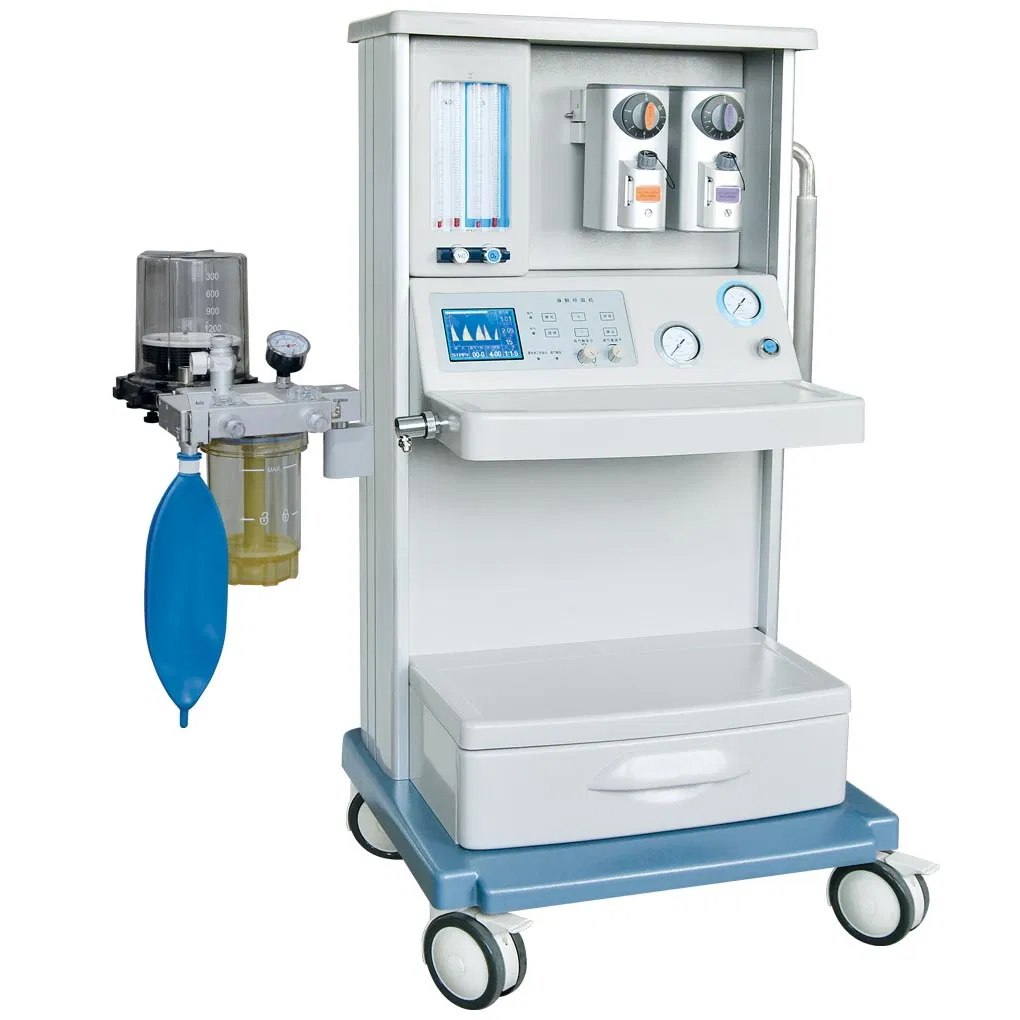
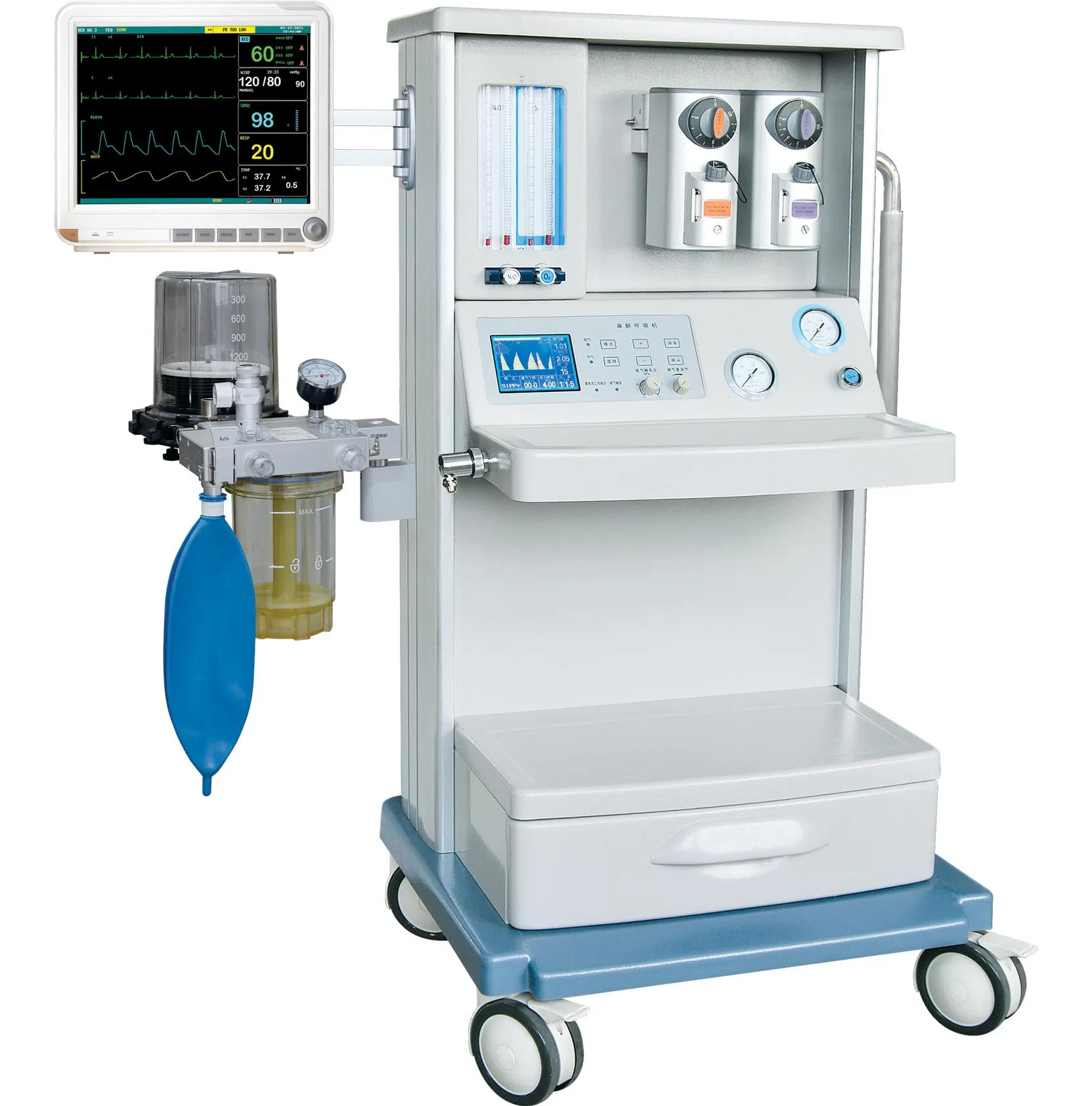
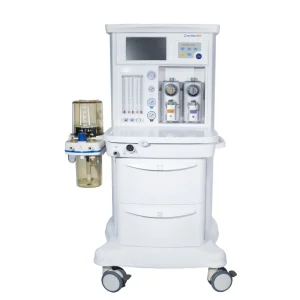
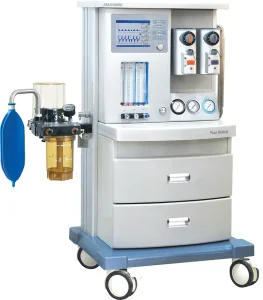
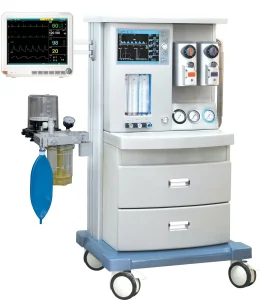
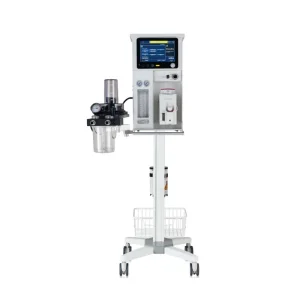
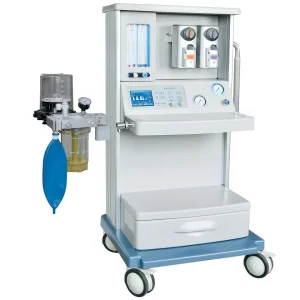
Model NO.:jinling-01B
Certification:ISO13485, RoHS
Target Group:Adult and Children
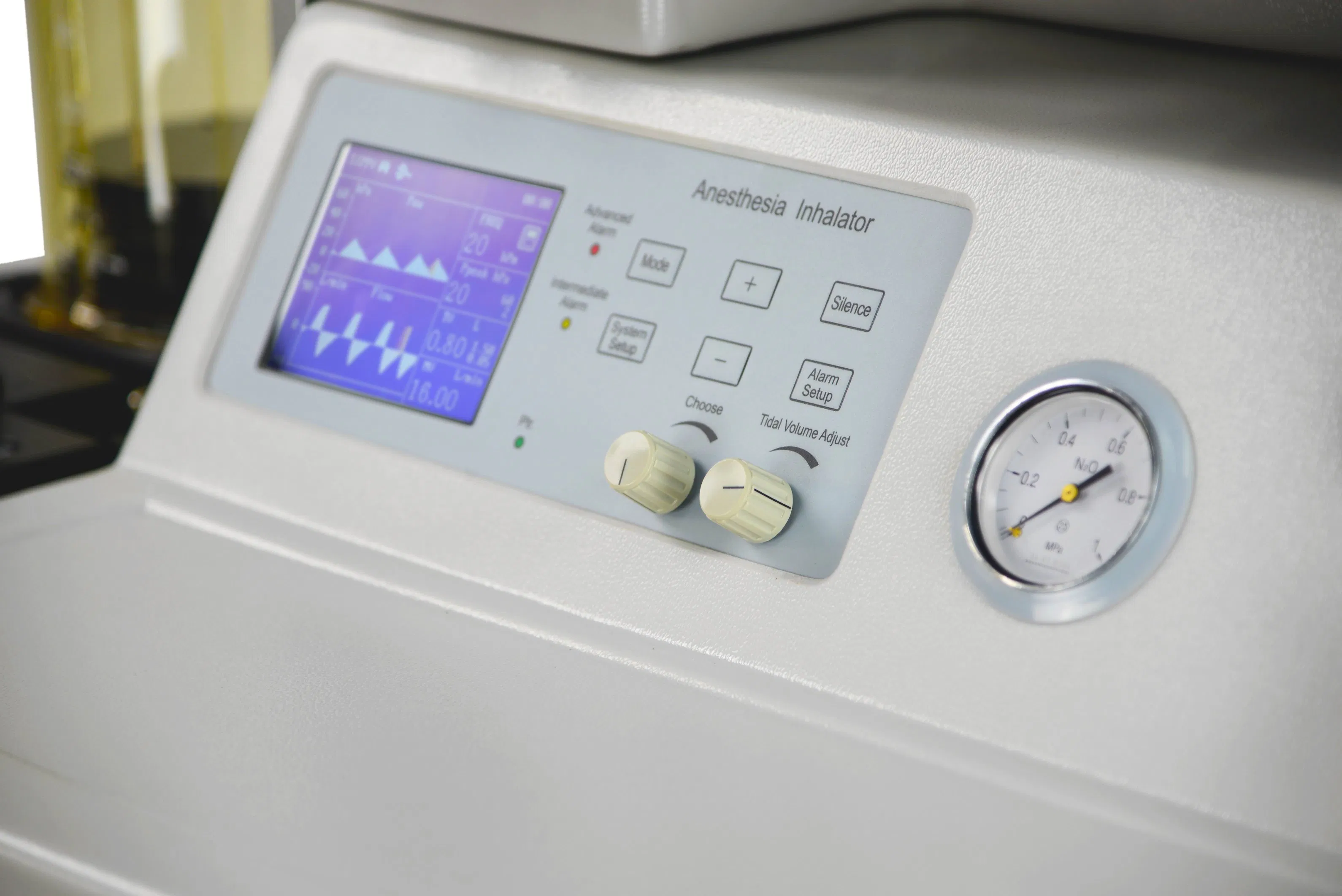
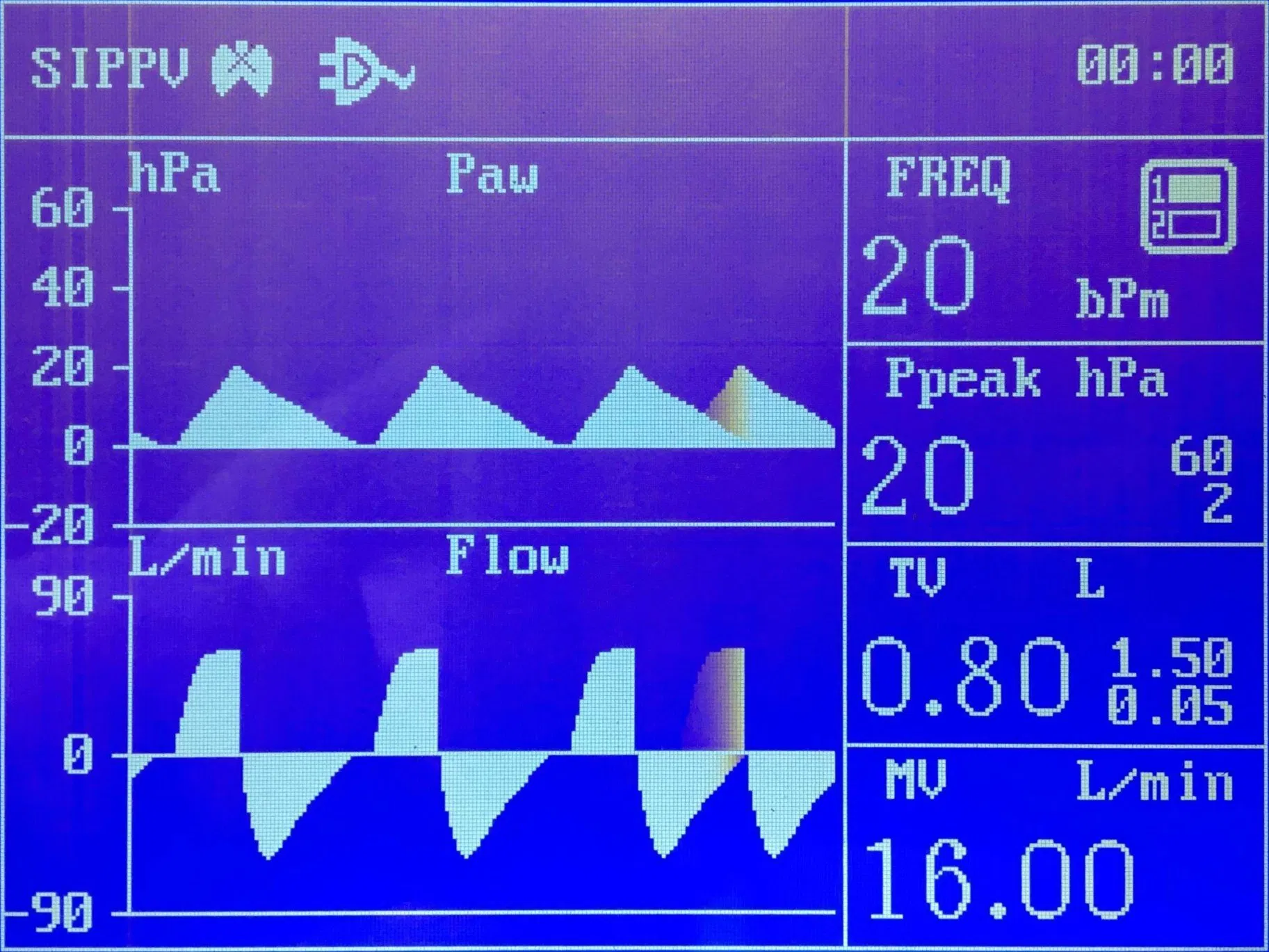
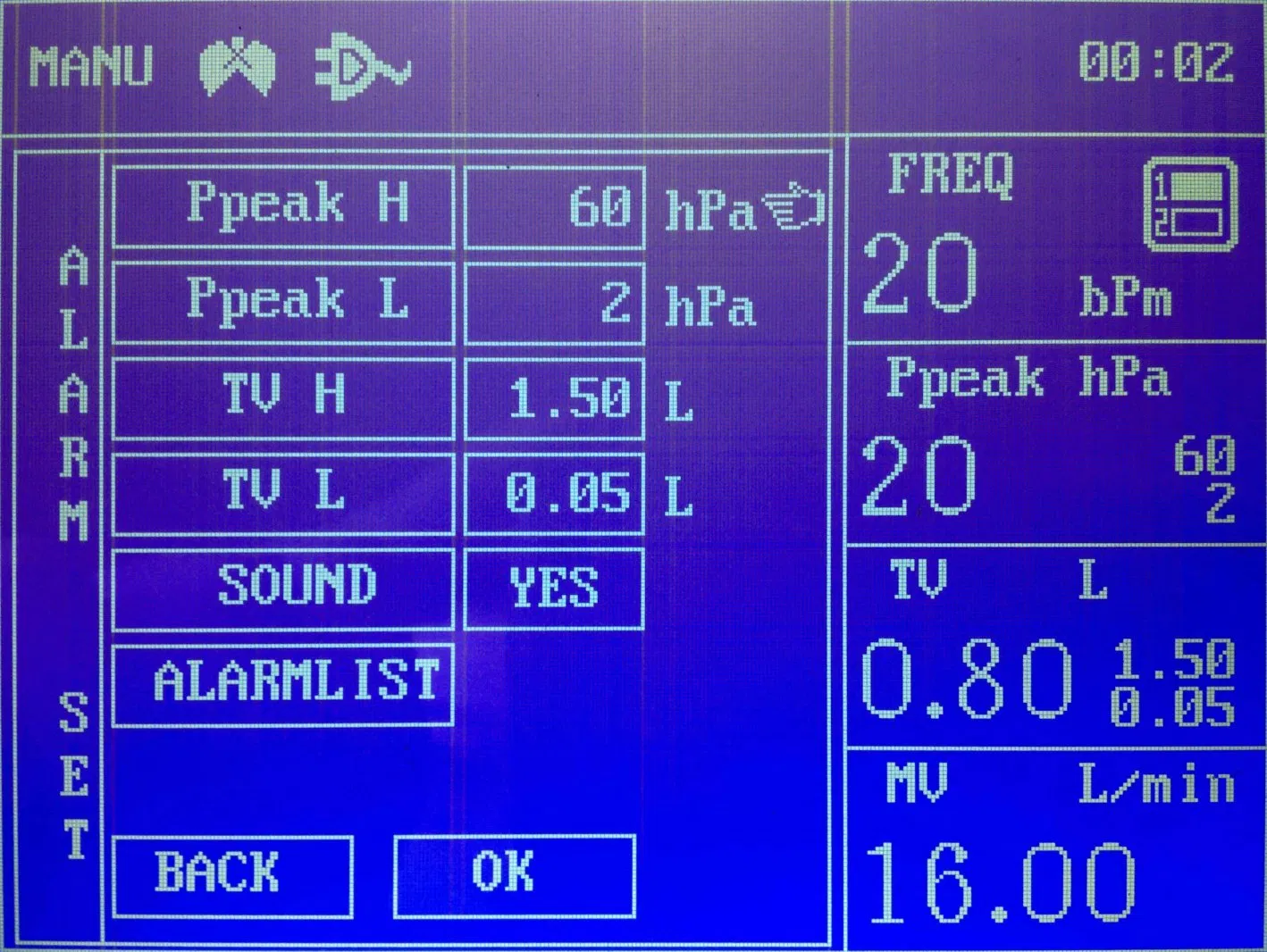
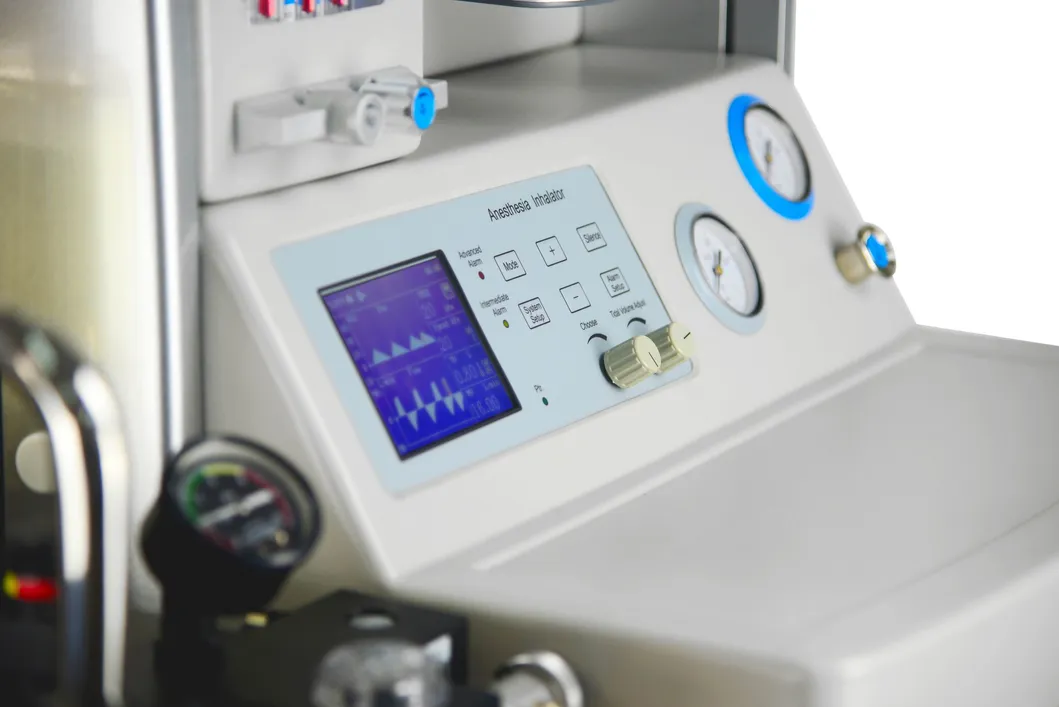
Display:5.4 Inch TFT Display
Flowmeter Range:O2: 0.1~10L/Min; N2o: 0.1~10L/Min
Ventilation Mode:IPPV, SIPPV, SIMV, Manual
Back-up Power:At least 4 Hours
Tidal Volume:50~1500ml (Adjustable)
Respiratory Rate:1~99bpm
I: E Ratio:4:1~1:10
Origin:China
Capacity:80 Unit/Month
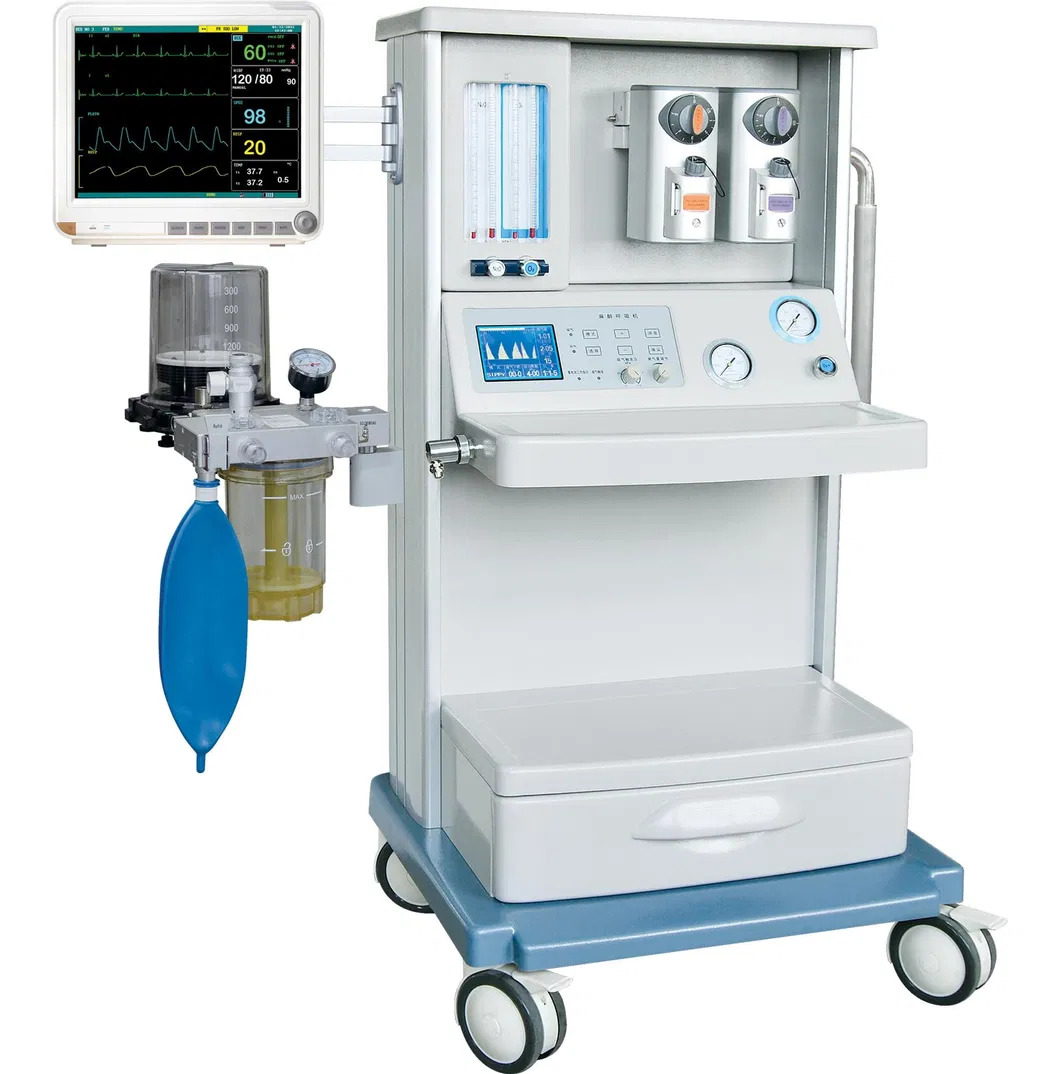
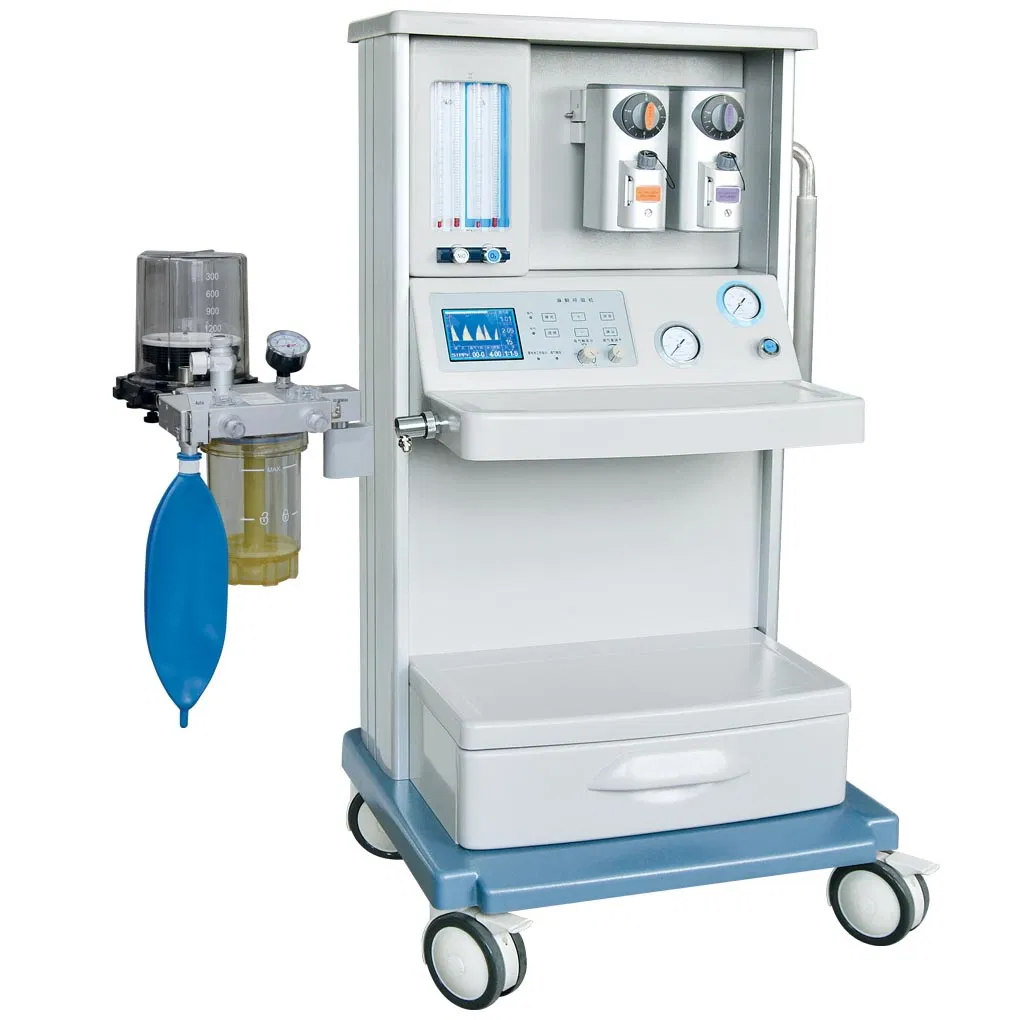
Equipped with electronic pressure differential flow sensor and imported respiratory control valve.
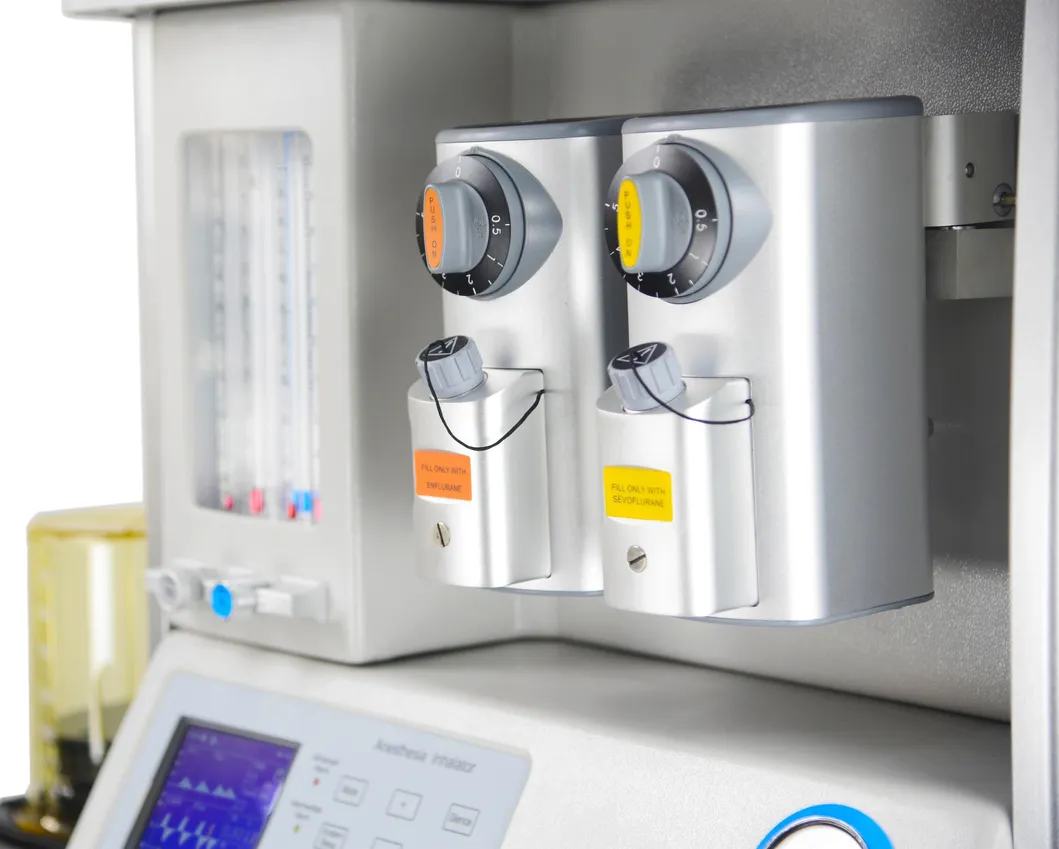
Vaporizer: Imported tank components with self-compensating functionality (Enflurane, Isoflurane, Sevoflurane, Halothane optional).
High precision four-tube flowmeter with interlocking oxygen-nitrous oxide supply (min 21% oxygen).
Nonhazardous environmentally friendly frame with automated self-checking and self-calibrating sensors.
Power Failure Support: Automatically converts to backup battery mode during AC power outages.
Comprehensive Alarms: Audible and visual alerts for tidal volume, airway pressure, asphyxia, and power failure.
Advanced rotating Na-lime tank using imported PPSU material (temperature resistant to 134°C).
Frequently Asked Questions
Q1: What is the screen size and type for this anesthesia machine?
The JINLING-01B model features a 5.4-inch TFT display for clear monitoring of ventilation parameters.
Q2: Which ventilation modes are available?
This equipment supports multiple modes including IPPV, SIPPV, IMV, SIMV, and Manual ventilation.
Q3: How long does the battery backup last during a power failure?
The integrated back-up power supply provides at least 4 hours of continuous operation in case of AC power loss.
Q4: What types of vaporizers can be used with this machine?
It supports Enflurane, Isoflurane, and Sevoflurane as standard, with Halothane available as an option. The machine features double PA-I type slots.
Q5: Is the equipment suitable for both adults and children?
Yes, the machine is designed for both adult and pediatric patients, with an adjustable tidal volume range from 50ml to 1500ml.
Q6: What safety features are included?
The system includes automated self-checking, oxygen-nitrous oxide interlocking to prevent hypoxia, and audible/visual alarms for tidal volume, pressure, and asphyxia.
 Emfix Medical