Why Do Orthopedic Surgeries Need Specialized Tables?

Time:2026-10-26 Author:Oliver
0%

Orthopedic surgery demands more than a sterile room and skilled hands. It requires a stable platform that supports precise positioning throughout long, technically demanding procedures. So, why is orthopedic surgery requiring specialized tables? The answer lies in control, access, safety, and consistency.

A specialized orthopedic table can help maintain traction, expose the surgical site, and support the patient’s body during imaging. Its adjustable sections accommodate procedures involving the hip, spine, pelvis, knee, and shoulder. Radiolucent surfaces may allow fluoroscopy equipment to capture clear images without repeated repositioning. That matters when even a small movement can affect alignment or surgical accuracy. Padded supports also help distribute pressure across vulnerable areas, although they cannot remove every positioning risk.

In practice, table selection depends on the operation, surgeon preference, imaging needs, and the patient’s condition. A fracture table may assist with controlled traction, while a spinal table can reduce abdominal pressure during prone surgery. These systems require trained staff, careful checks, and communication before incision. Small errors can still occur. A strap may need adjustment. A support may interfere with imaging. Recognizing these limitations reflects responsible surgical planning, not weakness.

Evidence-based protocols and manufacturer guidance should shape table use. Experienced teams inspect attachments, confirm locking mechanisms, protect nerves, and reassess pressure points during lengthy cases. Specialized tables do not replace clinical judgment. They strengthen it by creating a more predictable working environment. Their value becomes clearest when positioning, visualization, and patient protection must happen together.
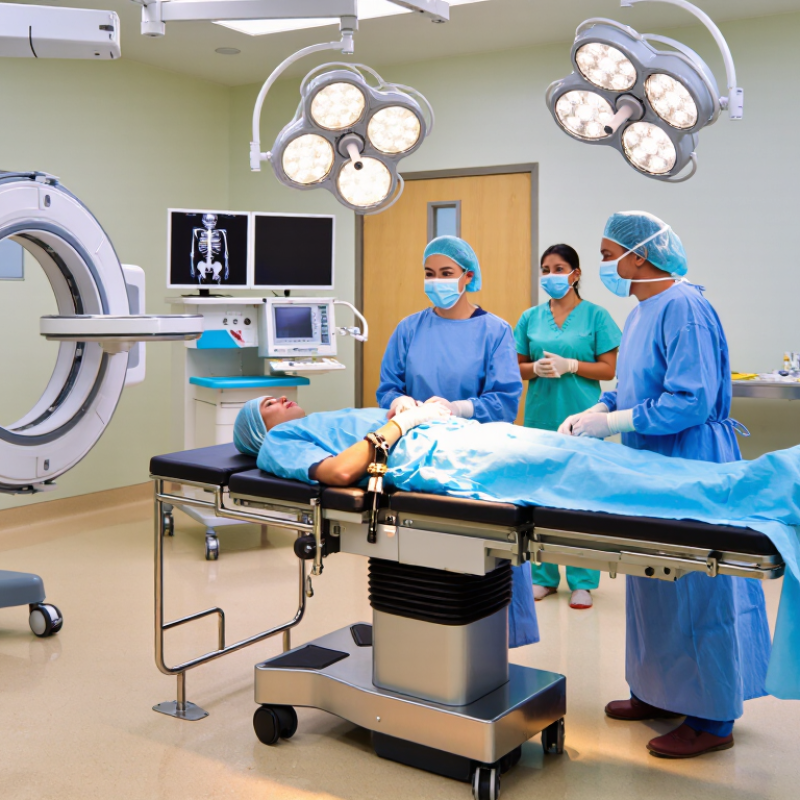
Why Do Orthopedic Surgeries Need Specialized Tables?

What Makes Orthopedic Surgery Different from Other Surgical Procedures?

Orthopedic surgery differs from many procedures because the team must manage bones, joints, muscles, and mechanical forces at the same time. A small alignment error can affect movement, stability, or recovery. The patient may also need traction, rotation, or firm support while the surgeon works near a joint.

A specialized orthopedic table helps create this controlled environment. Its sections can support the pelvis, legs, or upper body without blocking the operative area. Some procedures require the leg to remain elevated and still. Others need controlled traction while imaging equipment moves around the patient. The table must allow these adjustments without sudden movement. It must also leave enough space for instruments, surgical staff, and real-time X-ray imaging.

From practical experience, positioning often takes longer than expected. Padding protects the heels, elbows, and shoulders from pressure during lengthy operations. Secure supports reduce unwanted movement, but excessive restraint can create new risks. That balance demands trained judgment, not simple equipment settings. No table solves every positioning problem. A patient’s body shape, bone condition, and surgical approach can change the plan. That assumption can fail. Teams usually confirm alignment, pressure points, and imaging access before the incision begins. Careful preparation supports safer handling and more consistent surgical precision.

How Specialized Tables Support Patient Positioning and Surgical Access

Why Do Orthopedic Surgeries Need Specialized Tables?

Orthopedic procedures often demand precise positioning, stability, and unobstructed surgical access. A specialized table supports these needs by holding the patient securely during traction, rotation, or elevation. Positioning is not a static task. The team may adjust the patient several times as anatomy, imaging, and surgical instruments change.

The Lancet Commission on Global Surgery estimated that about 313 million operations occur worldwide each year. Even a small positioning error can affect many patients across healthcare systems. Pressure, nerve compression, and restricted breathing remain practical concerns during long procedures. A table with adjustable sections can help distribute pressure and create clearer access around the hip, spine, knee, or shoulder. Small shifts matter. So does padding.

Perioperative guidance from the Association of periOperative Registered Nurses emphasizes documented positioning assessments, protective padding, and continuous team communication. The World Health Organization’s checklist evaluation reported major complications declining from 11.0% to 7.0%, while inpatient mortality fell from 1.5% to 0.8%. The table cannot produce these results alone. It must support a reliable process involving surgeons, anesthetists, and nurses. Evidence directly connecting one table design with fewer injuries remains limited. That limitation deserves honesty. Better equipment still requires trained judgment, repeated skin checks, and careful reassessment when surgery takes longer than expected.

Why Do Orthopedic Surgeries Need Specialized Tables? – How Specialized Tables Support Patient Positioning and Surgical Access

Surgical Requirement Common Orthopedic Application Specialized Table Support Patient Positioning Benefit Surgical Access Benefit Key Safety Consideration
Radiographic Imaging Fracture fixation, pelvic surgery, spinal procedures, and image-guided joint operations Radiolucent sections and a frame that permits movement of the imaging equipment around the patient Maintains a stable position while imaging is obtained from different angles Reduces the need to reposition the patient during fluoroscopic or radiographic assessment All supports should remain outside the required imaging field whenever possible
Traction Femoral shaft fractures, hip procedures, and selected lower-limb reconstructions Adjustable traction attachments with controlled longitudinal force and compatible leg supports Helps maintain limb alignment and may assist with restoring length during the procedure Creates working space around the hip, thigh, or lower leg Traction force and duration must be monitored to reduce the risk of nerve, skin, and soft-tissue injury
Spine Positioning Posterior spinal decompression, fusion, and other procedures performed in the prone position Adjustable chest and pelvic supports that leave the abdomen relatively free Supports neutral spinal alignment and helps limit pressure on the abdomen and chest Provides access to the posterior spine while allowing the surgical team to work at a suitable height Pressure points, airway security, eyes, and ventilation must be checked after positioning
Lateral Positioning Selected hip, shoulder, and lateral spine procedures Stable lateral supports, padding systems, and adjustable table sections Reduces unwanted torso movement and helps maintain a controlled lateral posture Improves exposure of the operative side without obstructing the surgical field Protect dependent nerves, the brachial plexus, bony prominences, and pressure-sensitive skin
Beach-Chair Positioning Shoulder arthroscopy, shoulder replacement, and selected upper-limb procedures Backrest articulation, head support, and adjustable leg sections Allows the torso and head to be supported in a semi-upright position Improves access to the shoulder while permitting arm manipulation when required Blood pressure at brain level and the risk of sliding or head movement require careful monitoring
Radiolucent Arm and Leg Support Upper- and lower-extremity trauma surgery, joint reconstruction, and arthroscopy Modular supports that can be adjusted or removed without interfering with imaging Maintains the limb in a reproducible position and helps reduce accidental movement Leaves the operative extremity accessible from multiple directions Padding and support placement should avoid excessive pressure and restricted circulation
Table Articulation Knee, hip, spine, and multi-stage orthopedic procedures Motorized or manually controlled height, tilt, back, leg, and flexion adjustments Allows the patient’s alignment to be refined without transferring them to another surface Can improve the surgeon’s working angle and help expose deep or narrow operative areas Movement should be coordinated with anesthesia staff, lines, tubes, and sterile drapes
Weight Distribution and Padding Long-duration arthroplasty, complex trauma, and reconstructive procedures Pressure-distributing pads, stable support surfaces, and adjustable contact points Helps distribute load across supported areas and limits concentrated pressure Provides a stable base that reduces involuntary movement during precise work Skin, nerves, circulation, and pressure areas should be reassessed throughout lengthy procedures
Operating-Room Access Procedures requiring anesthesia equipment, imaging, implants, and multiple surgical team members Open base designs, mobile components, and a broad range of height adjustment Allows positioning to be adapted to the patient and the anesthesia setup Creates clearance for imaging equipment, instruments, assistants, and surgical approaches Brakes, locks, and table stability must be verified before the sterile field is established
Infection Control All orthopedic operations, particularly procedures involving implants Smooth, sealed, cleanable surfaces and removable accessories where appropriate Supports consistent preparation and reduces areas where contaminants may accumulate Allows accessories to be selected and arranged without unnecessary equipment near the field Cleaning and disinfection must follow the healthcare facility’s validated protocol
Safe Patient Transfer Emergency trauma, frail patients, and cases requiring transfer between beds and imaging areas Compatible transfer surfaces, locking casters, side supports, and secure positioning accessories Helps limit unwanted movement during transfer and setup Maintains access for staff and equipment while reducing avoidable handling Transfer plans should account for patient weight, lines, drains, fractures, and fall risk
Sterile Field Compatibility Open fixation, arthroplasty, arthroscopy, and minimally invasive orthopedic procedures Adjustable sections and accessories that can be positioned before draping Helps preserve the planned posture after sterile preparation Supports unobstructed access while keeping table controls and nonsterile equipment manageable Final adjustments should be limited after draping and performed without contaminating the field

Key Features of Orthopedic Operating Tables and Their Functions

Why Do Orthopedic Surgeries Need Specialized Tables?

Orthopedic procedures require stable positioning, controlled access, and dependable imaging. A specialized operating table supports all three. Its height and tilt controls help teams align the patient with the surgical field. Smooth electric adjustments reduce manual lifting and unnecessary movement. That matters when a limb is injured or carefully fixed.

A radiolucent tabletop allows C-arm images without repeated repositioning. This can shorten interruptions during fracture fixation.

Modular sections and attachments support different procedures, from hip repair to spinal surgery. Traction systems apply measured force and maintain leg alignment. They must be adjusted gradually, checked often, and released safely. Small errors can affect nerves, skin, or joint position.

Wide pads distribute pressure around the shoulders, pelvis, and heels. Pressure relief is not decorative.

Good tables also provide secure side rails, locking casters, and a clearly visible weight rating. Waterproof, seamless surfaces make cleaning more reliable between cases. Controls should respond predictably, even when staff wear gloves.

In practice, the table is part of the surgical workflow, not merely furniture. No table is perfect.

A traction setting that works for one patient may be unsuitable for another. Teams should reassess alignment, padding, and circulation throughout the procedure. Convenience can distract from observation, especially during long operations.

How Specialized Tables Improve Safety, Precision, and Surgical Efficiency

Why Do Orthopedic Surgeries Need Specialized Tables?

Orthopedic procedures demand stable positioning, clear imaging, and controlled access to the surgical site. A specialized table supports these needs through adjustable height, firm patient support, and compatible imaging space. During a hip or spine procedure, even slight movement can affect alignment and prolong the operation. A well-positioned table helps the surgical team work with greater confidence and consistency.

Safety improves when pressure points remain supported and the patient stays securely positioned. Adjustable sections can reduce unnecessary stretching, while radiolucent surfaces allow imaging equipment to capture clearer views. Precision also depends on access. The table should permit surgeons to reach the target area without awkward angles or repeated repositioning. Small improvements matter. They may reduce interruptions and help the team maintain a smoother workflow.

Tips: Check table stability before positioning the patient. Confirm weight limits, locking mechanisms, padding, and imaging access. Keep cables and attachments away from the operating field. Staff should review the setup before incision, not during a problem. In practice, no table solves every challenge. Complex body shapes, equipment limits, or unexpected positioning changes still require clinical judgment. A useful setup is not always the fastest one. It must protect the patient while supporting precise movement and clear communication.

Why Do Orthopedic Surgeries Need Specialized Tables?

Specialized orthopedic tables provide controlled positioning and unobstructed imaging access, helping surgical teams improve safety, precision, and workflow efficiency.

The chart shows representative adjustment ranges commonly specified for orthopedic operating tables. Wider controlled positioning ranges support accurate alignment, easier fluoroscopic imaging, and fewer manual repositioning steps. Exact specifications vary by table design.

Safety Stable positioning and controlled movement help reduce unnecessary patient handling during surgery.
Precision Fine angulation supports accurate anatomical alignment and consistent access to the operative site.
Efficiency Radiolucent surfaces and broad positioning capability reduce interruptions for imaging and repositioning.

Factors Hospitals Consider When Selecting Orthopedic Surgery Tables

Why Do Orthopedic Surgeries Need Specialized Tables?

Hospitals select orthopedic surgery tables by examining clinical needs, not appearance. The table must support stable positioning during joint, spine, and trauma procedures. It should also allow surgeons clear access to the operating area. Small movements can affect alignment and surgical accuracy.

Imaging compatibility is a major consideration. Radiolucent sections help teams capture useful images without repeated repositioning. Hospitals also review weight capacity, height adjustment, tilt control, and accessory compatibility. These features support different patient sizes and surgical approaches. Patient safety remains central. Secure padding can reduce pressure injuries during lengthy procedures, while reliable locking systems help prevent unwanted movement. It must clean easily, too.

Workflow matters just as much. Operating-room staff evaluate how quickly the table can be prepared, adjusted, and stored. Biomedical engineers check maintenance access, electrical safety, and service documentation. Infection-prevention teams may examine surface design, seams, and cleaning instructions. A trial in a simulated operating room can expose problems that specifications miss. This is important. A technically advanced table may still slow a procedure if controls feel confusing. Hospitals should also consider staff training, replacement parts, warranty terms, and long-term operating costs. The lowest purchase price rarely shows the full expense. No table fits every procedure perfectly. Procurement teams may need to accept a few compromises, then document why those compromises are clinically reasonable.

FAQS

How is orthopedic surgery different from many other surgical procedures?

It manages bones, joints, muscles, and mechanical forces together. A small alignment error can change movement or stability. The patient may need traction, rotation, or firm support.

Why are specialized operating tables used in orthopedic surgery?

They provide stable positioning and clear access to the surgical area. They can support the pelvis, legs, or upper body. They also allow imaging equipment to move around the patient.

What does a radiolucent tabletop do?

It allows X-ray images without repeatedly moving the patient. This can reduce interruptions during fracture fixation. Imaging access matters.

How do traction systems support orthopedic procedures?

They apply measured force to help maintain leg or joint alignment. Staff should adjust traction gradually and check it regularly. Too much force may affect nerves, skin, or joint position.

What padding is important during a long operation?

Padding commonly protects the heels, elbows, shoulders, and pelvis. Wide pads spread pressure across larger areas. Pressure relief is not decorative. Teams must still inspect circulation and skin condition.

What safety features should an orthopedic table include?

Useful features include secure side rails, locking casters, and clear weight ratings. Predictable controls help staff make adjustments while wearing gloves. Waterproof, seamless surfaces support more reliable cleaning.

How do hospitals choose an orthopedic operating table?

Hospitals review clinical needs, imaging access, weight capacity, and accessory compatibility. They also examine height adjustment, tilt control, maintenance, and electrical safety. A simulated operating-room trial can reveal practical problems.

Can one orthopedic table support every procedure and patient?

No table fits every situation perfectly. Body shape, bone condition, and surgical approach can change the positioning plan. A traction setting suitable for one patient may be unsuitable for another. That assumption can fail.

Why is staff training important when using an orthopedic table?

Equipment settings cannot replace trained judgment. Staff must confirm alignment, pressure points, padding, and imaging access before incision. They should reassess these factors during long procedures. Convenience can distract from observation.

Conclusion

Orthopedic surgery involves complex procedures on bones, joints, and the spine, often requiring unusual patient positions, precise alignment, and unobstructed access to the surgical site. Why is orthopedic surgery requiring specialized tables? These procedures depend on stable positioning, controlled movement, and support for imaging or traction, which standard operating tables may not provide. Specialized orthopedic tables are designed to accommodate different positions, maintain patient stability, and give surgeons better access during lengthy and technically demanding operations.

Key features may include adjustable sections, radiolucent surfaces, traction systems, secure supports, height and tilt adjustment, and compatibility with surgical imaging equipment. Together, these functions can improve surgical precision, reduce unnecessary repositioning, and support patient safety by helping prevent pressure injuries and positioning-related complications. When selecting an orthopedic surgery table, hospitals typically consider versatility, weight capacity, ease of cleaning, durability, imaging compatibility, staff usability, and overall cost. A well-chosen table can improve workflow, operating room efficiency, and the consistency of orthopedic care.

Oliver

Oliver

Oliver is a seasoned marketing professional with a wealth of expertise in driving brand awareness and engagement. With a deep understanding of our company's product offerings, he consistently delivers high-quality content that enriches our professional blog. His insights not only shed light on......