Why are mobile examination lamps better for clinics? In 2026, the answer is practical: they let staff bring focused light to the patient, rather than rearranging the room around a fixed fixture. A lamp can roll beside an examination couch, turn toward a wound, or move between treatment spaces. Small adjustments matter. Clear, consistent light helps clinicians inspect skin, dressings, and other visible details without relying on a phone torch or shifting the patient unnecessarily.
Nursing pioneer Florence Nightingale wrote, “Second only to their need of fresh air is their need of light.” Her observation concerned patient environments, not modern mobile lamps, but it underscores why lighting deserves attention in care settings. A mobile lamp can offer useful flexibility, especially in clinics with shared rooms or changing procedures. Yet mobility alone does not ensure good clinical lighting. Beam control, stable wheels, cleanable surfaces, color rendering, and sufficient illumination all deserve review. A bright hotspot can be uncomfortable; a poorly positioned lamp can still cast shadows. It is easy to overlook those details.
For clinic managers, the choice should match actual workflows, room size, and maintenance capacity. Check the lamp’s reach at the examination couch, how securely its head stays in position, and whether its controls are easy to clean. Battery models may improve placement, but charging routines add another task. The honest answer is not that every mobile lamp is better. It is that a suitable one can make examinations more adaptable, while poor selection can create new inconveniences.
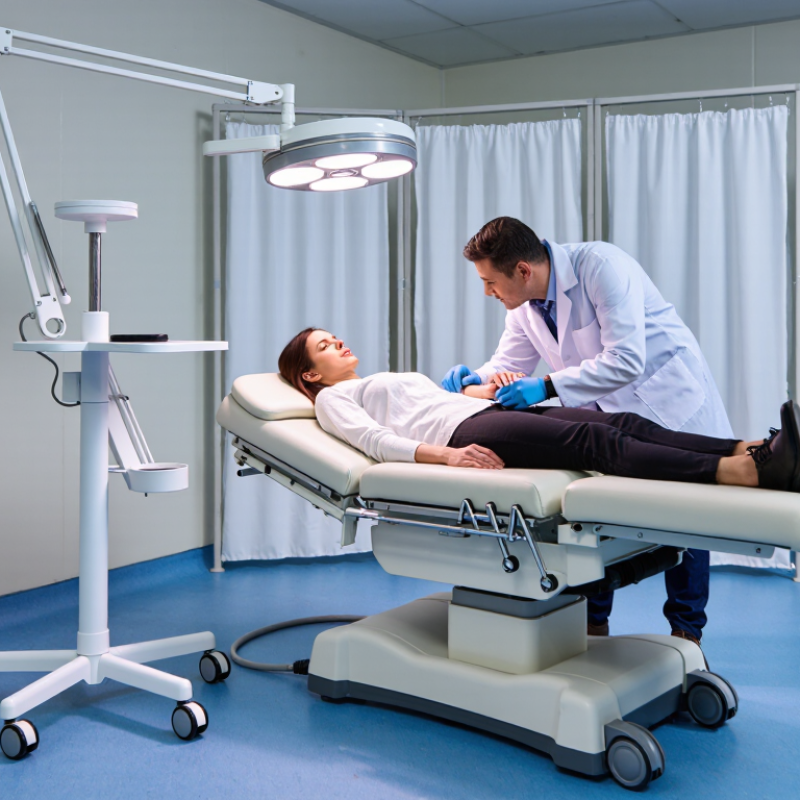
A mobile examination lamp is useful when clinicians need clear, directed light at different bedsides. But easy movement is only part of the decision. Electrical safety, stable positioning, and predictable performance matter in a busy clinic.
IEC 60601-2-41 sets particular requirements for the basic safety and essential performance of surgical luminaires and luminaires for diagnosis. For an examination light, this means assessing the device as medical electrical equipment, not merely as a bright bulb on a stand. Conformity testing addresses relevant electrical and mechanical hazards, while performance requirements help define how the light should function. The exact assessment depends on the lamp’s intended use and classification, so buyers should check the manufacturer’s documentation rather than rely on a sales description. Small details matter.
In daily use, look at the lamp’s base, castor locks, arm joints, and cable routing. A light that drifts during a close examination can interrupt care, even if its beam appears adequate. Cleanable surfaces also help staff follow the clinic’s infection-control procedures. The standard supports a safety baseline; it does not replace local risk assessment, correct installation, or routine inspection. And paperwork alone is not enough. A lamp can meet a standard yet still feel awkward in a cramped room, which is worth checking before purchase.
It sets requirements for basic safety and essential performance. Assessment depends on the light’s intended use and classification.
No. A compliant light may still feel awkward in a cramped room. Check its movement and positioning before purchase.
Check the base, castor locks, arm joints, and cable routing. Small details matter.
A drifting lamp can interrupt close work, even when its beam seems bright enough. That can be frustrating.
LED bulbs use at least 75% less energy in the comparison described. This compares lighting technologies, not total clinic energy use.
No. Savings depend on operating hours, lamp wattage, brightness settings, and electricity rates. Measuring actual use is more reliable.
LEDs generally send less radiant heat toward the patient. The amount can vary by lamp design.
Battery size and brightness settings both matter. Check the stated runtime and power use; the LED label alone is not enough.
Why are mobile examination lamps better for clinics? They bring dependable lighting directly to the point of care, allowing staff to position illumination where an examination takes place and adapt to different rooms or clinical tasks. In 2026, choosing a lamp means looking beyond mobility: suitable illuminance, natural and consistent color, easy positioning, and surfaces that can be cleaned as part of routine care all matter. Safety requirements in IEC 60601-2-41 provide an important framework for examination lights, helping clinics assess equipment designed for medical use.
LED technology can also make mobile lamps more energy-efficient and durable than traditional incandescent lighting. The U.S. Department of Energy reports that LEDs use at least 75% less energy and can last up to 25 times longer than incandescent bulbs. These advantages can reduce energy use and the frequency of bulb replacement. Together, practical portability, appropriate lighting performance, cleanability, and efficient operation make mobile examination lamps a useful option for modern clinics.

 Emfix Medical