Choosing the appropriate surgical light is crucial for any minor procedure. Surgeons often overlook this aspect, yet it significantly impacts precision and outcomes. The question arises: How to choose the right surgical light for minor procedures?
A well-lit workspace enhances visibility and ensures that details are not missed. Understanding the features of surgical lights can aid in making an informed decision. Factors such as luminosity, color temperature, and mobility play essential roles. Reliable lighting can reduce eye strain and improve focus.
However, not all surgical lights meet every need. Some lights might be too bright, while others may lack adequate focus. Evaluating these options can feel overwhelming. Thus, reflecting on your specific requirements is critical for finding the best fit. We will explore ten useful tips to guide you in selecting the ideal surgical lighting for your minor procedures.
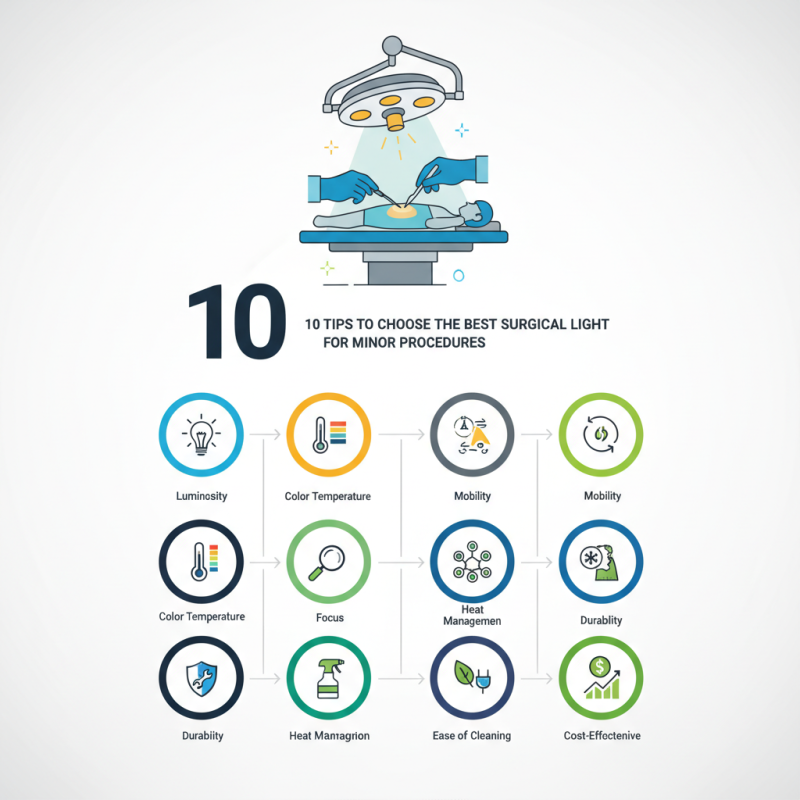
Surgical lighting plays a crucial role in minor procedures. Proper illumination enhances visibility for healthcare professionals. Inadequate lighting can lead to mistakes and complications. It is essential to ensure that the surgical field is well-lit. Bright, even, and flicker-free light helps in precise tissue handling.
When selecting surgical lights, consider factors like brightness and color temperature. The right color temperature mimics natural daylight. This aids in true color perception during procedures. Also, adjustable lights provide flexibility, allowing practitioners to focus light where needed. Different types of minor surgeries may have unique lighting needs.
Reflect on past experiences where lighting affected outcomes. Adapting to varied environments is key in surgical settings. Sometimes, lights may create shadows or glare, affecting visibility. Being mindful of these issues can improve procedural efficacy. Inconsistencies in lighting equipment can challenge surgical precision. Hence, evaluating the best options is necessary for patient safety and successful outcomes.
Choosing the right surgical light for minor procedures is crucial. Proper lighting enhances visibility and ensures safety. Focus on key features when making your selection. Light intensity is essential. Opt for adjustable brightness levels. This allows you to customize the light according to the procedure.
Another critical feature is shadow reduction. A good surgical light should minimize shadows to provide a clear view of the surgical field. Quality lights often have multiple light sources to achieve this. Additionally, the color temperature is important. Aim for lights that mimic natural daylight for accurate color perception.
When assessing surgical lights, consider mobility. A light with a flexible arm allows for easy repositioning. Yet, it’s vital to evaluate its stability during procedures. Some lights might wobble, which can be distracting. Think about the light's ease of use too. Complicated controls can lead to unwanted distractions mid-procedure. Always prioritize functionality combined with user-friendly design.
When selecting surgical lights for minor procedures, understanding their types and applications is crucial. Surgery settings often utilize various lighting options, including LED, halogen, and fiber optic lights. According to a report by Healthcare Lighting, LED surgical lights can significantly reduce energy costs by up to 75% compared to traditional lighting. This makes them a popular choice for clinics focused on sustainability.
LED lights provide enhanced brightness and durability, ideal for minor surgeries. They minimize shadows and provide a consistent color temperature, aiding in accurate assessments. Halogen lights, while brighter, generate more heat, which may become uncomfortable during prolonged use. Fiber optic lights offer flexibility in positioning, but their light intensity can be limited. Each type has merits and drawbacks, requiring careful evaluation based on the specific needs of a procedure.
Lighting quality is not merely a preference; it directly impacts surgical outcomes. Poor lighting can lead to increased operation times and potential errors. A study published in the Journal of Surgical Research highlighted that inadequate illumination during procedures raises the risk of complications by 30%. As such, it’s paramount for healthcare providers to weigh the benefits and limitations of each light type before making a choice.
In surgical environments, ensuring optimal visibility is crucial. Brightness and color temperature directly affect the quality of procedures. Research indicates that the ideal brightness level for surgical lights ranges between 1,000 to 2,000 lux. This level provides surgeons with sufficient illumination without causing glare. Mismatched color temperatures can lead to errors in assessing tissue tone, making it essential to choose lights with adjustable color temperatures. A temperature around 4,000 to 5,500 Kelvin is often recommended for accurate visual assessment.
When selecting a surgical light, consider these tips. Evaluate the reach of the light. A light with greater reach ensures that every corner of the operating field is well-lit. Moreover, pay attention to the heat emitted by the lights. Excess heat can cause discomfort and distractions for the surgical team. It’s vital to choose lights that minimize heat production.
Reflect on the importance of uniform lighting. Poorly lit areas can hide critical details, leading to complications. High-quality surgical lights should eliminate shadows effectively. Flexibility in positioning is another aspect to weigh. Adjustable mounts allow surgeons to direct light precisely where needed, enhancing visibility during critical moments. Investing time in evaluating these features will ultimately lead to better surgical outcomes.
When considering surgical lighting for minor procedures, budgeting is crucial. High-quality surgical lights can vary widely in cost. Understanding essential features is key to making informed decisions. Energy-efficient LED lights may have higher upfront costs but save money on replacements and energy bills over time. This makes them a wise investment for long-term savings.
Remember, cost doesn’t always equate to quality. Some less expensive options might still offer adequate illumination and flexibility. Assess the specific needs of your procedures before making a purchase. Consider how the light will be used and the type of surgeries performed. This reflection can save funds and ensure you get a reliable light.
Compare different solutions while considering maintenance costs. Regular maintenance can enhance the lifespan of lights but adds to the budget. Be wary of hidden costs that might not be evident initially. Exploring different manufacturers and models can lead to discovering valuable options within your price range. Making light choices can be daunting, but thorough research is essential.
| Feature | Consideration | Cost (% of Total Budget) | Lifespan (Years) |
|---|---|---|---|
| Light Intensity | Ensure adequate brightness for surgical precision | 15% | 10 |
| Color Rendering Index (CRI) | Higher CRI for better tissue color perception | 10% | 7 |
| Mobility | Consider fixed vs. mobile lights based on space | 12% | 10 |
| Ease of Sterilization | Materials should allow for easy cleaning | 8% | 8 |
| Lighting Type | LED vs. halogen: compare longevity and heat output | 20% | 12 |
| Adjustment Features | Flexibility in positioning and angle | 5% | 9 |
| Warranty and Service | Evaluate warranty duration and service support | 6% | 5 |
| Power Source | Consider battery vs. direct power for flexibility | 4% | 10 |
| Price Range | Balance between features and budget constraints | 10% | N/A |
| User Reviews | Research feedback from medical professionals | 1% | N/A |
: Proper surgical lighting enhances visibility, which is crucial for avoiding mistakes and complications during procedures.
Brightness and color temperature are key factors. They directly affect visibility and true color perception.
Research suggests a brightness of 1,000 to 2,000 lux for optimal illumination without causing glare.
Mismatched color temperatures can lead to errors in tissue assessment. Ideal temperatures range from 4,000 to 5,500 Kelvin.
Poor lighting can create shadows, hide details, and lead to complications, adversely affecting patient safety.
A light with greater reach ensures all areas are well-lit, which is vital for thorough examinations.
Excessive heat can distract the surgical team and cause discomfort. Lights should minimize heat production.
Adjustable lights allow surgeons to direct illumination precisely, enhancing visibility during critical moments.
Reflecting on past procedures can highlight the importance of proper lighting and its impact on outcomes.
Uniform lighting eliminates shadows and reveals critical details, which can prevent operational complications.
When considering how to choose the right surgical light for minor procedures, it is essential to understand the significance of optimal lighting in enhancing visibility and precision during surgery. Key factors include the type of surgical lights available, such as ceiling-mounted or portable options, and their specific applications in minor surgical settings. Evaluating brightness and color temperature is crucial, as suitable illumination can significantly impact the quality of surgical outcomes.
Additionally, budgeting plays a vital role in selecting the appropriate surgical lighting solutions. Balancing quality and cost ensures that healthcare facilities can invest in reliable lighting without overspending. By focusing on these elements, practitioners can effectively determine the best surgical light that meets their operational needs for minor procedures.

Emfix Medical