When choosing the right surgical lighting, one must consider both halogen and LED options. What is the difference between halogen and LED surgical lights? This question is crucial for medical professionals aiming to enhance surgical precision.
Halogen lights have been a staple in operating rooms for decades. They deliver strong illumination and can be adjusted easily. However, they generate heat, which may cause discomfort during extended procedures. On the other hand, LED surgical lights are known for their energy efficiency and longer lifespan. They provide bright, cool illumination, reducing fatigue for both surgeons and patients.
Understanding these differences is essential for making informed decisions. Each lighting type has its own set of advantages and drawbacks. Reflecting on these factors can lead to better patient outcomes and improved surgical environments. Choosing the right lighting can be a matter of life and death.
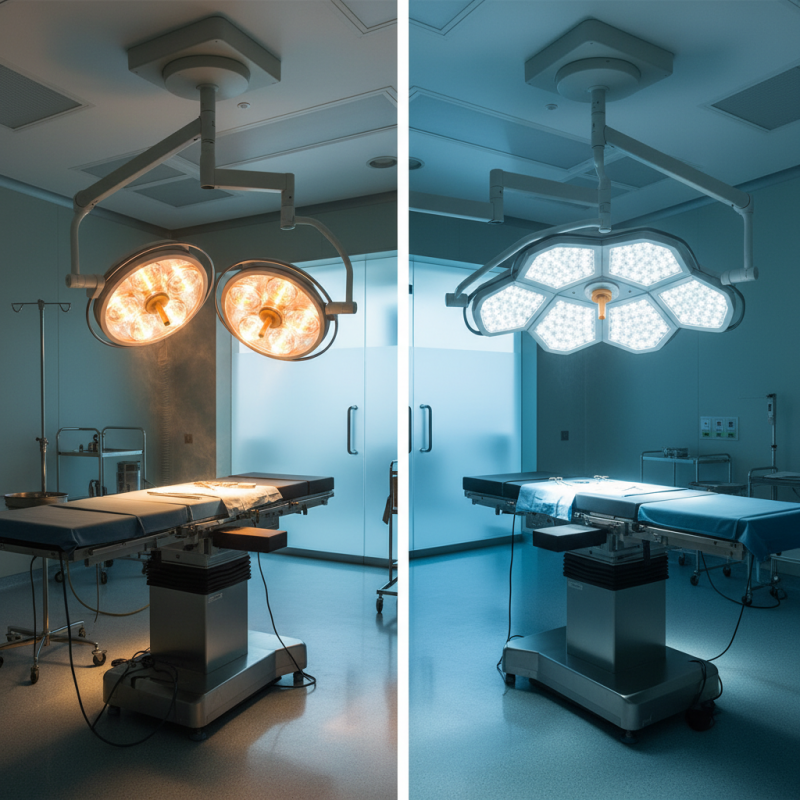
Understanding Surgical Lighting: The Importance of Choice
Surgical lighting plays a crucial role in medical procedures. The choice between
halogen and
LED lights can significantly
impact surgical outcomes. Each lighting type offers distinct advantages, but the best
choice depends on specific needs and circumstances.
One key consideration is color temperature. Halogen lights provide warm light, which can
enhance depth perception. However, LED lights offer a more consistent and brighter
illumination. This can help surgeons focus better on intricate details. It is essential
to weigh these factors carefully.
Tips:
Consider the lighting’s heat output. Halogen lights can become quite hot,
potentially affecting the surgical field. LED lights typically remain cool, which
is beneficial.
Another factor is energy efficiency. LED lights consume less power and have
longer lifespans compared to halogen lights. While the initial
investment may be higher, long-term savings on energy and replacement costs are significant.
Tips:
Evaluate your surgical schedule. If frequent light replacements hinder operations,
LED could be the wiser choice.
Ultimately, understanding your specific lighting needs aids in making an informed
decision, ensuring optimal visibility during critical procedures.
Comparing Halogen and LED Surgical Lights: Key Differences
When it comes to surgical lighting, choosing between halogen and LED options is crucial. Halogen lights have been the traditional choice for many years. They produce a warm, bright light, which is beneficial for certain procedures. However, they generate significant heat, posing a risk to both patients and surgeons. A report by the American Surgical Association indicates that reducing operating room temperature is vital for patient safety. This heat can be uncomfortable during long surgeries, necessitating careful management of the operating environment.
On the other hand, LED surgical lights are gaining popularity. They consume less energy and offer a longer lifespan, often exceeding 50,000 hours. According to a recent study published in the Journal of Surgical Research, LED lights can reduce energy costs by up to 85% compared to halogen lights. They also provide superior light intensity and color accuracy, which are essential for precision in surgical procedures. However, some reviews suggest that not all LEDs provide consistent brightness levels. This inconsistency can impact visibility, making it essential to choose reliable technology.
In weighing these factors, surgeons must consider not just the benefits but also the limitations. Both halogen and LED lights offer distinct advantages and potential drawbacks. Understanding these differences helps professionals make informed choices tailored to their specific needs.
Comparison of Halogen and LED Surgical Lights
Benefits of Halogen Surgical Lights in Surgical Settings
Halogen surgical lights are a popular choice in operating rooms. They provide bright, focused illumination crucial for surgical procedures. Research shows that proper lighting can reduce surgical errors by up to 30%. This is particularly vital during complex operations where precision is paramount. The warm color temperature of halogen lights mimics natural light, enhancing visibility. Surgeons report better color distinction with halogen, which aids in identifying tissue types.
Moreover, halogen lights are relatively inexpensive to maintain. They have a longer lifespan compared to traditional incandescent bulbs, reducing replacement frequency. Hospitals can save significantly on costs while ensuring high-quality lighting. However, the heat produced by these lights can be a drawback. Surgeons may find them uncomfortable during prolonged surgeries. It’s essential to balance brightness with comfort.
Tips: Adjust the height and angle of the lights for optimal focus. Regular maintenance checks ensure consistent performance. Consider the surgical environment's temperature; this can impact the surgeon’s efficiency. Overall, while halogen surgical lights have notable advantages, careful consideration is needed to address their shortcomings. Ensuring that lighting choices suit both task requirements and the surgical team’s comfort is crucial for a successful operation.
Advantages of LED Surgical Lights: Efficiency and Performance
LED surgical lights are transforming modern operating rooms. These lights offer significant advantages in terms of efficiency and performance. A study published in the Journal of Surgical Research reported that LED lights consume up to 80% less energy than traditional halogen sources. This energy efficiency translates to lower operational costs for healthcare facilities, providing both environmental and financial benefits.
Additionally, LED lights boast a longer lifespan, typically lasting up to 50,000 hours compared to about 2,000 hours for halogen lights. This longevity reduces the frequency of replacements, minimizing disruptions during surgeries. Furthermore, LED lights provide superior color rendering. Surgeries require precise color differentiation, and LED lights offer improved clarity. According to the American Journal of Surgery, better color accuracy can enhance surgical outcomes as it helps surgeons differentiate tissues more effectively.
However, there are challenges. Initial installation costs for LED systems can be higher. Some facilities hesitate to invest despite the long-term savings. It’s essential for healthcare leaders to analyze their specific circumstances. Evaluating energy savings against upfront costs may reveal surprising insights. Each hospital must weigh these factors carefully to optimize their surgical lighting choices.
Why Choose Halogen or LED Surgical Lights for Your Needs?
| Feature |
Halogen Surgical Lights |
LED Surgical Lights |
| Light Output |
High, but decreases over time |
Consistent and long-lasting |
| Energy Efficiency |
Less efficient |
Highly efficient, lower energy costs |
| Heat Generation |
Produces significant heat |
Minimal heat production |
| Lifespan |
Approximately 1,000 hours |
Up to 50,000 hours |
| Cost |
Generally lower initial cost |
Higher initial investment, but save over time |
| Color Rendering Index (CRI) |
Good, but varies by bulb |
Excellent color accuracy |
Factors to Consider When Choosing Between Halogen and LED Lights
When choosing between halogen and LED surgical lights, several factors come into play. Halogen lights have been a staple in the operating room for years. They provide excellent color rendering and high-intensity illumination. However, they tend to generate more heat. This can make the surgical environment uncomfortable over time. Surgeons often need to adjust their positions to avoid the glare, impacting focus during critical procedures.
On the other hand, LED lights are gaining popularity for good reasons. They emit less heat, reducing the strain on both the surgical team and the patient. Their energy efficiency also leads to lower operational costs. The longevity of LED lamps means less frequent bulb replacements. However, some surgeons feel that the initial upfront cost may be a deterrent. It's essential to weigh the benefits against the budget constraints.
Choosing the right lighting is not just a financial decision. It's about creating an optimal environment for patient care. Consider how each light type aligns with your specific needs and the experiences of your team. Their feedback can guide you in making a well-informed choice that enhances surgical outcomes. Balancing these details may seem daunting, yet it's an essential part of ensuring successful procedures.
Conclusion
In the choice between halogen and LED surgical lights, understanding the differences and benefits of each is crucial for optimal surgical performance. Halogen surgical lights are known for their warm color rendering and lower initial costs, making them a popular choice in some settings. However, LED surgical lights provide greater energy efficiency, longer lifespan, and superior intensity control, which can enhance visibility during surgery.
When considering what is the difference between halogen and LED surgical lights, it's essential to evaluate factors such as brightness, heat emission, and operational costs. Halogen lights may offer advantages in certain contexts, but LED lights are increasingly favored for their advanced performance and lower environmental impact. Ultimately, the choice should align with the specific needs of the surgical environment and the preferences of the surgical team.

 Emfix Medical